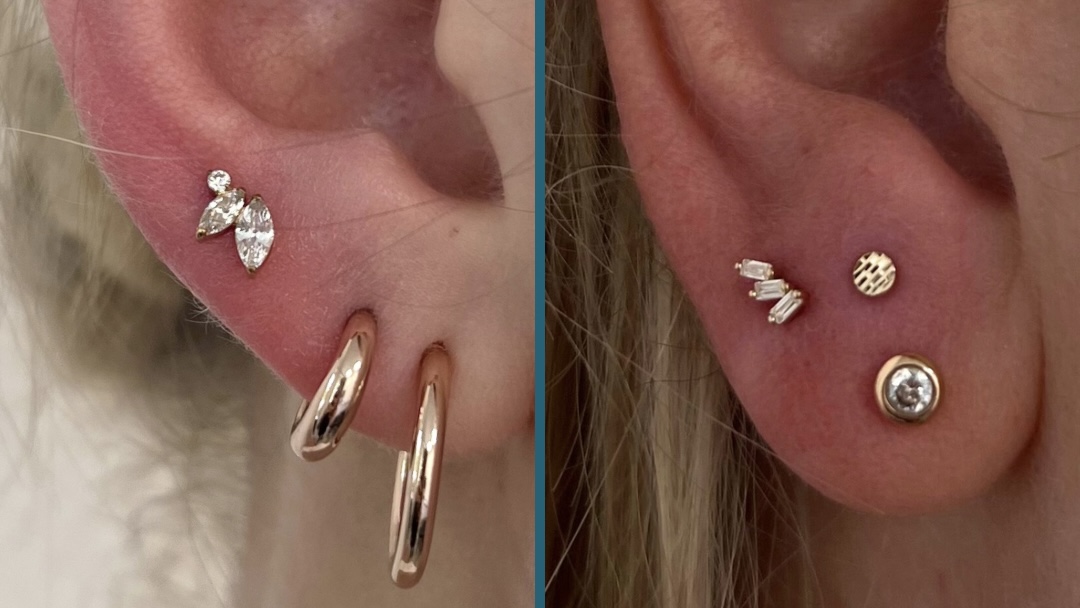
One of the most common questions we get in our studio is: Which is better—titanium or gold? Both materials are safe, beautiful, and high quality, but each has its own advantages. In this article, we’ll explain why both titanium and gold are excellent choices for piercings and help you decide which material better suits your needs.
Why choose titanium?
Titanium is the most popular choice for piercings. Since this material comes into direct contact with your tissues, its composition must be of the highest quality. The main benefits of titanium include:
- Biologinis suderinamumas. Titanas nesukelia alerginių reakcijų, todėl tinka net ir jautriausiai odai
- Hipoalergiškumas. Medicininis titanas (ASTM F-136 arba implantinis titanas) yra viena saugiausių medžiagų vėrimams – jis nedirgina ir leidžia žaizdelei gyti greičiau
- Lengvumas. Titaniniai auskarai yra itin lengvi, todėl juos galima nešioti ilgą laiką
- Atsparumas korozijai. Titanas nesioksiduoja ir nereaguoja su prakaitu ar kitais skysčiais, todėl net ir per ilgą laiką nepakeičia spalvos
- Patvarumas. Titanas yra labai tvirtas, todėl auskarai tarnauja itin ilgai ir nesideformuoja
- Minimalistinis dizainas. Titaniniai papuošalai pasižymi neįmantriu, universaliu dizainu, kuris tinka bet kokiam stiliui
- Spalvų pasirinkimas. Titanas gali būti anoduotas, tad galite rinktis ne tik natūralų sidabrinį, bet ir kone visų vaivorykštės spalvų metalo atspalvius
If you’re looking for lightweight, durable jewelry with a wide variety of design options, titanium is an excellent choice.
Why choose gold?
Gold is often used in ear piercings and other placements where its beauty can truly shine. The main benefits of gold include:
- Dizaino galimybės. Auksas yra minkštesnis ir lengviau apdirbamas, todėl papuošalų dizainas gali būti itin smulkus bei sudėtingas, neretai su inkrustuotais brangakmeniais
- Elegancija. Auksiniai papuošalai spindi prabanga ir suteikia išskirtinumo
- Hipoalergiškumas. Aukštos kokybės auksas (ne mažiau nei 14K) nesukelia alerginių reakcijų, jei jame nėra alergizuojančių priemaišų, tokių kaip nikelis
- Ilgaamžiškumas. Auksas yra atsparus korozijai ir oksidacijai, todėl ilgai išlaiko spindesį
- Estetika. Auksas puikiai dera prie įvairaus stiliaus – tiek minimalistinio, tiek prabangaus
- Investicinė vertė. Skirtingai nuo kitų metalų, auksas ilgainiui nepraranda savo vertės ir gali būti laikomas investicija
If you value elegance, unique design, and lasting shine, gold is a wonderful choice.
Which is better?
Neither material is strictly better than the other. Both titanium and gold are excellent choices for the healing phase of your piercing and for long-term wear. However, it’s essential to avoid cheaper, unsafe alternatives such as uncertified surgical steel, silver, or acrylic, which often cause allergies and irritation.
According to research, nickel and other metal alloys in jewelry can cause allergic reactions in up to 22% of people, depending on the country. To limit nickel content, the European Union has issued specific directives for jewelry manufacturing.
That’s why it’s so important to choose certified, thoroughly tested materials that support your well-being.
Which should you choose?
Your choice of jewelry depends entirely on your needs and style. If you prefer lightweight, simple pieces, titanium is the way to go. If you want luxury, a variety of design options, and a radiant shine, gold is an excellent option.
It’s important to remember that it’s not just the metal that matters—the jewelry should be well-crafted, and your piercing should be properly cared for. Even the best piece of jewelry can cause discomfort if it’s not suited to your anatomy. This is why it’s worth consulting a professional to find the best option that will not only look beautiful but also remain comfortable in the long run.
It’s interesting to note that the key element uniting these two metals—titanium and gold—in piercing jewelry is the quality of the polish.
How does regular jewelry differ from body jewelry?
When we think of jewelry, we often picture gold, diamonds, rubies, sapphires, and platinum—sparkling gemstones and precious metals. However, there are significant differences between traditional jewelry and body jewelry.
Different purposes
Traditional jewelry is primarily art, with design and intricate shapes taking center stage while functionality comes second. For example, a large ring might be uncomfortable, or a complex bracelet clasp may be annoying, but it’s acceptable as long as the piece looks beautiful.
Body jewelry, on the other hand, is designed to be both beautiful and safe, comfortable, and suitable for long-term wear. This jewelry is often worn 24/7 while sleeping, eating, and exercising, making functionality and safety top priorities.
Polishing and surface finish
The surface of traditional jewelry is smooth and beautiful but does not need to be flawless under a microscope since rings or necklaces aren’t worn inside the body. In contrast, the polish of body jewelry is critical: a mirror-like finish ensures that bacteria and dirt do not accumulate on the jewelry, protecting the piercing.
Choosing reliable manufacturers
Jewelry makers often focus on art and aesthetics and may not consider the functional needs of body jewelry, such as comfort during wear. This is why it is best to choose professional body jewelry manufacturers who understand piercing anatomy and the safety requirements for piercing jewelry.
Final thoughts
Choosing between titanium and gold depends on your personal priorities and lifestyle. Each material has its unique advantages, so it’s important to consider what suits you best. Additionally, always choose reliable, certified jewelry suppliers to ensure what matters most—your health and comfort.
Your body deserves only the highest quality jewelry!
